

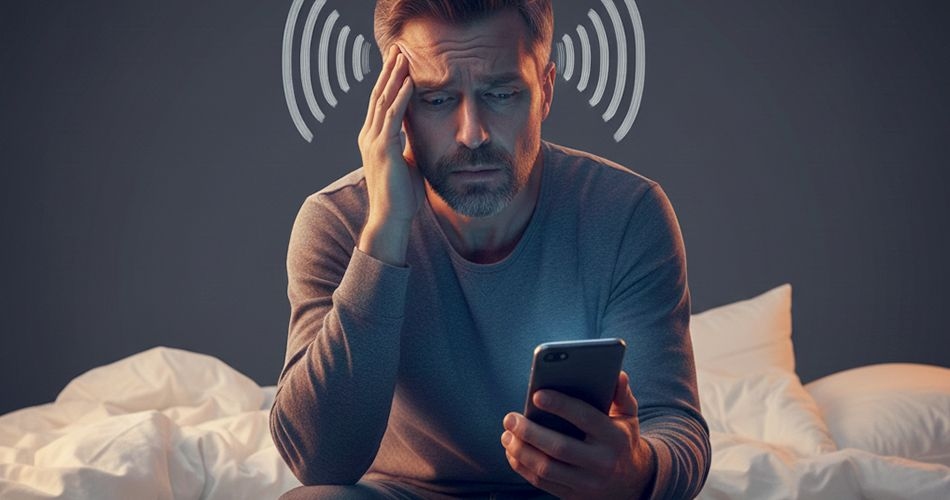
The term “Exploding Head Syndrome” has recently gained more attention among sleep researchers as they continue to study unique sensory experiences that can happen during sleep.
Research shows that around 16% of people experience sudden loud noises while falling asleep or waking up, and most of them have no idea why this happens.
Recently, EHS has become more common due to increased reporting from people around the world, especially adults who are under a lot of stress, have irregular sleep schedules, and/or have disrupted sleep cycles.
As people become more aware of EHS through doctors’ offices and the internet, it is becoming increasingly important to understand the various ways to cope with EHS to improve sleep quality and reduce nighttime disturbances.
Exploding Head Syndrome (EHS)
Exploding Head Syndrome (EHS) refers to an abnormal occurrence (i.e., a parasomnia) that occurs either when falling asleep or waking up.
Someone experiencing EHS would hear an extremely loud noise, similar to an explosion, gunshot, cymbal crash, fireworks, or slamming doors, but in reality, they do not experience any external sound; rather, they are actually experiencing a type of sensory illusion when they hear this sort of sound.
Thus, EHS is classified as 'sensory hallucination.'
- EHS occurs when one falls asleep and wakes up.
- The sounds heard are generated by one's own mind, not from the surrounding environment.
- Any individual experiencing EHS experiences an extremely short duration (1-2 seconds), yet they are very intense.
- Many people report experiencing a jolt, seeing bright flashes of light when they hear the noise associated with EHS, and experiencing muscle spasms at the same time they hear the noise associated with EHS.
Although feelings such as fear, panic, etc., accompany these episodes, they are non-threatening, painless, and (in most cases) not indicative of any serious medical condition.
Symptoms of EHS
Exploding Head Syndrome is an alarming but harmless phenomenon that can occur while you sleep. It typically occurs while falling asleep or just as you wake up, when your brain is transitioning between different states.
When a person experiences this sensation, they feel a sudden loud bang or crash that is typically thought to be the sound of a gunshot or an explosion that happens mentally, with no sound in the environment.
Symptoms generally associated with exploding head syndrome are as follows:
- The sound of a bang or crash, a gunshot, or electric popping in the head.
- Some people may see a flash of light at the same time they experience the sound.
- Immediately after experiencing this sound, many people will experience a jolt of adrenaline or fear.
- Muscle twitching or a brief feeling of being stunned.
- Although the sensation is extreme, there is no actual pain associated with the experience.
There is no risk associated with exploding head syndrome; the episodes are not associated with any type of brain damage or signs of serious illness. It is believed to be a result of the way that the central auditory and sensory systems in our brains misfire when transitioning to sleep; essentially, it is a "glitch" in the transition between wakefulness and sleep.
Although poor sleep, irregular sleep patterns, and stress may contribute to an increased likelihood of the episodes occurring, many people experience them only once to a few times throughout their lives.
What Causes Exploding Head Syndrome?
EHS occurs when a person transitions from being awake to sleeping. This process is broken down into stages so that a person wakes up and falls into a deep enough sleep (Stage 3 sleep).
If a person does not successfully make it through all of those stages, parts of his/her auditory or sensory members of their brain may get "turned off" at the same time, causing them to misfire.
Many different types of circumstances could contribute to the event, but medics do not yet have any evidence showing there is a specific cause. However, all the following have been associated with EHS incidents.

- Transition stage misfires: During a transition stage, the brainstem, and auditory pathways generate bursts of neural activity.
- Disrupted sleep patterns: Insomnia and irregular sleep can contribute to more frequent episodes of EHS.
- Increased level of stress/anxiety: Increased nervous system activity makes it easier for a "misfire" in the auditory numbers of the brain to occur when going to sleep.
- Excessive fatigue/lack of sleep: Chronic fatigue will alter the normal "shut-down sequence" in the brain.
- Co-existing medical problems (sleep disorders such as sleep paralysis): Individuals with EHS may also have other parasomnias associated with their condition.
Importantly, EHS does not cause any lasting harm to a person and is usually short-lived. EHS is more of a glitch than something that poses any medical threats to an individual.
Is it Dangerous?
No, Exploding Head Syndrome is not a medical emergency.
Although the experience can be traumatic or scary, it’s not physically damaging or harmful to the brain; nor is it related to stroke, seizure, or any other serious neurological condition. As such, doctors consider it a harmless form of sleep-related activity.
People are often anxious about the intensity of the “explosion” they experience, but the most important point to keep in mind about EHS is that these explosions:
- Don’t hurt
- They are only felt for a brief period of time
- Most individuals will have normal neurological exams and brain imaging (i.e., CT, MRI).
- Many of these episodes resolve themselves with time.
So, the only real “danger” associated with exploding head syndrome is the anxiety it can cause, which could interfere with sleep for a short period of time- but the condition itself is not dangerous.
Diagnosis of Exploding Head Syndrome
The diagnosis of Exploding Head Syndrome is primarily based on your reported symptoms, as there is no blood test, scan, or other physical indicator for it.
A physician evaluates your account of the episodes, giving particular importance to the loud "explosion," the timing of the episodes in relation to your sleep cycle, and the absence of reports of pain, in addition to eliminating the possibility of other suspected medical conditions that could account for your symptoms.
Things that an individual will need to provide to a physician to help with the diagnosis of Exploding Head Syndrome will usually include:
- The episode occurs while falling asleep or waking up
- The explosion sound is an internal noise and not an external or environmental noise
- There is no associated pain, confusion, or residual effects
- No loss of consciousness, seizure-like activity, or severe headache
- The symptoms match known patterns of sleep parasomnia.
When an individual presents symptoms that do not fit the typical pattern, the physician may do the following:
- Perform a sleep study, also known as polysomnography, to look for other sleep disorders
- Perform a neurological evaluation if there is suspicion of seizures or headaches
- Perform hearing tests to rule out ear problems as the cause
- Occasionally, a physician may use MRI or EEG, primarily to rule out more serious medical conditions.
Most of the time, once a physician has ruled out any other issues, a diagnosis is relatively easy to make. Physicians categorize it as a benign parasomnia, meaning that it is non-threatening and related to the transition between sleep and wakefulness.
Treatment of Exploding Head Syndrome
Generally, exploding head syndrome will not require medical care as it is harmless and typically goes away over time; the most important concern is decreasing trigger factors and providing calmness to the brain during sleep transitions.
The best ways to reduce exploding head syndrome:
Improve Sleep: Try to have a routine for going to bed every night (including at least an hour before). The more consistent you are with your bedtime, the more consistent your brain will be when it comes to transitioning between sleep and wakefulness.
Reduce Stress: Practicing relaxing techniques such as deep breathing, meditation, and light stretching before bed will help to reduce overactivity of your nervous system—the leading trigger for exploding head syndrome.
Avoid Extreme Fatigue: Sleep is critical to maintaining healthy brain function. To avoid the “misfiring” of brain activity that leads to exploding head syndrome, ensure that you get enough sleep.
Reduce Stimulants: Cutting back on caffeine and/or nicotine in the evenings will reduce the occurrence of exploding head syndrome.
The frequency of episodes or individual distress associated with the episodes can lead to physicians trying a few temporary treatment options:
- Low-dose amitriptyline (a tricyclic antidepressant) may be prescribed
- In some cases of acute EHS, a calcium channel blocker may also be prescribed
- Anti-anxiety medication can be prescribed in cases where anxiety increases the severity of the condition
Prescribing these medications is not standard practice; rather, they are prescribed only when EHS is significantly interfering with sleep patterns or when an individual feels extremely anxious regarding their EHS experience.
Another component of treatment is reassurance. Simply understanding that EHS is not dangerous and does not mean that a person has had a seizure or sustained brain damage can be sufficient to decrease the number of episodes.
The anxiety about these occurrences can lead to an increased frequency of these episodes, and the use of reassurance will help to break that cycle.

Final Thoughts
Though it may seem like a frightening thing to experience, Exploding Head Syndrome (EHS) does not cause physical harm and generally only lasts briefly. Many people find it reassuring to understand that EHS is merely a "glitch" in your brain about sleeping, which helps alleviate anxiety and provides comfort during this experience.
In general, those with consistent sleep patterns, lower stress levels, and avoidance of stimulating activities before bedtime see EHS episodes decrease naturally. If the patient continues to find EHS distressing, a simple visit to the physician will usually provide the necessary reassurance to regain confidence and feel more relaxed at night.