

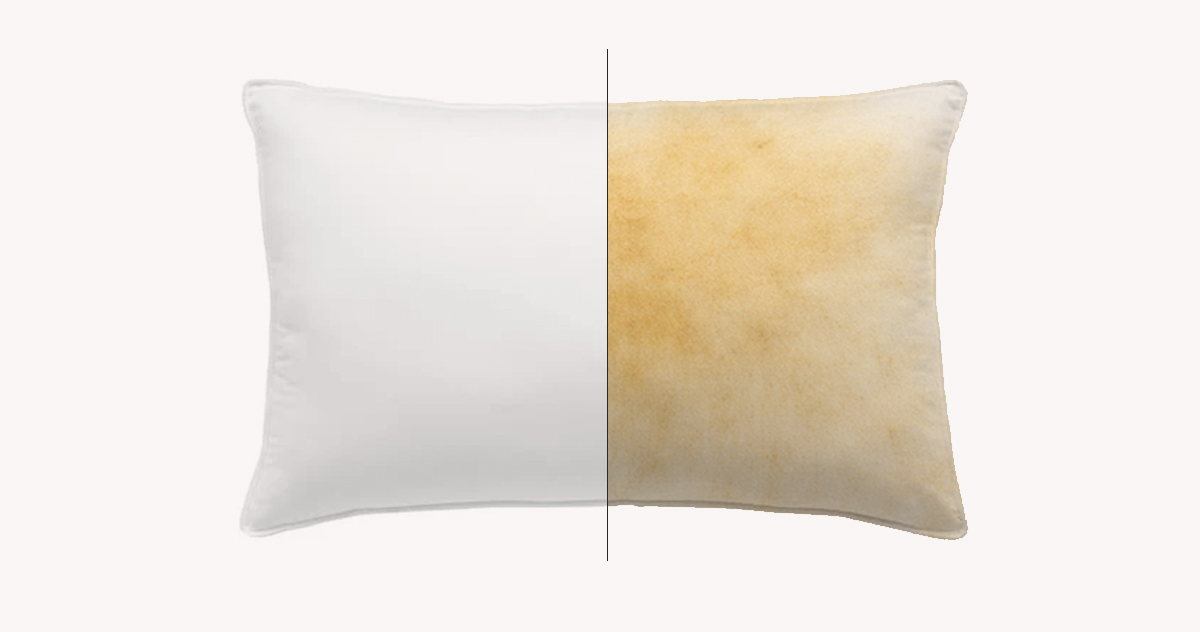
You've undoubtedly noticed that a once-white, clean pillow is gradually becoming dull and yellow. When everything else in your bedding appears fresh, it can be a little uncomfortable, even embarrassing. In actuality, though, this situation is very typical. You're not alone if you're wondering why pillows turn yellow.
Pillow yellowing is more likely the result of regular exposure to substances your body naturally produces, rather than an indication of poor hygiene. Your pillow gradually accumulates sweat, oils, and even the surrounding air, leaving behind those tenacious yellow stains. The good news? It is controllable and, for the most part, reversible.
In this guide, we’ll break down what really causes a yellow stain on a pillow, how to deal with it effectively, and most importantly, how to prevent it from happening again. Later on, we'll walk through practical, real-world approaches. Nothing overly technical, just what actually works.
5 Reasons Why Your Pillows Have Turned Yellow
When we see yellow stains on our pillow, it is obvious to think that it is dirty. But it is more than that; many factors can cause our pillows to appear yellow and stained. Let’s go through each one of them:
1. Sweat and Body Oils
One of the most common and biggest reasons for a yellowing pillow is body sweat and oils. Everyone sweats naturally and produces oils while sleeping at night. Even after you take a shower before going to bed, your body still produces oil during the night, which is absorbed into the pillow through the pillowcase.
The oil and sweat seep through the pillowcase into the pillow and become oxidized, which then turns the pillow yellow. [4]
2. Moisture through Damp Hair
Going to bed with wet hair seems harmless, but your wet hair adds additional moisture to your pillow.[3] This creates a perfect environment for your pillows to develop stains in no time. Certain places with high humidity make it even worse, as moisture from the pillow doesn’t evaporate so quickly.
3. Haircare and Skincare Products
Nighttime skin-care products, hair oils, serums, and leave-in conditioners for your hair can all seep through your pillowcase and transfer onto your pillow. While these products are beneficial for your skin and hair, they can react with fabrics and cause a residue to build up on your pillow over time. Continuous buildup will cause oxidation, and your pillow will start changing its color, thus turning yellow.
4. Saliva from Drooling
Most people don’t talk about drooling at night, but it’s completely normal. Saliva contains enzymes that can stain fabric [3]. If you leave your pillow unwashed for a long time, it will make the stain stronger and even build a pungent smell over time.
5. Not Washing Frequently
Leaving your pillows and pillowcases unwashed for a long time can create an unsanitary sleeping environment. The oils and moisture your body gives off will build up in the pillow and become stubborn over time.
Your pillows will develop a darker shade and can, therefore, shorten their lifespan. Frequently washing your pillows according to the care instructions helps extend their lifespan while keeping them fresher and cleaner.

The Science Behind Pillows Turning Yellow
What seems like a regular and normal yellow stain might result from many factors that someone has neglected for months or even years. A pillow is highly prone to slow chemical changes because it is constantly in contact with your skin, hair, breath, and surroundings. The yellowing we see in our pillows gradually results from how organic materials interact with the fabric over time.
Basically, the theory is that once a natural substance produced by the body comes into contact with heat, moisture, and oxygen, it will begin to disintegrate into smaller pieces and then reassemble into new substances, which can cause different reactions when they are exposed to the light we perceive as color.
When natural substances are broken down at their molecular level and recombined into new substances, they produce new chemical compounds (the light will have been emitted as a result of a chemical reaction) that can react differently with light than the original substance did; these new chemical compounds are usually observed as being different colors.

Chemical Transformation
Your pillow acts as a sponge for microscopic organic material. Over time, traceable amounts of lipids, proteins, and salts build up in the pillow fiber. When these materials are deeply embedded in the pillow, they are exposed to oxygen, which causes minute chemical reactions.
The chemical reaction will later affect the structure, and the material/fabric of the pillow will start to change its color as the bonds will now change and form new ones. The yellowing has penetrated more than just the surface of the pillows, making it very difficult to return them to their original appearance. [1]
Oxidation and Exposure to Light
Science can identify one reason for yellowing: the process of oxidation. When organic molecules are combined with oxygen, they can undergo a process of breakdown to form smaller molecules.
As this breakage continues, some of the resulting products, or by-products, will have a natural yellowish tint to them. Long exposure to light may also speed up this reaction [4], leading to the breakdown of certain materials, even if they are exposed to indirect lighting.
As a result, the discoloration process will continue and can even happen faster than if there were no light, which is similar to how paper develops yellowing as it ages or how textile-based materials will fade in color over time. [2]
Speed of Heat and Reaction
Temperature can have a subtle, yet significant, impact. A pillow holds your body heat for long periods. As a result, the heat absorbed by your pillow will be utilized as an accelerant for certain reactions. [4]
Therefore, substances absorbed by your pillow will transform gradually and consistently over time. Eventually, repeated exposure to heat will create a noticeable difference. Over time (weeks or months), dirt accumulation will impact your pillows, resulting in discolored areas. [1]
Fabric Structure and Absorption
Other factors that contribute to the yellowing of your pillows are the internal structure. When cleaning a pillowcase, some material will break down during washing and create tiny particles that settle within the fibers of the pillow and ultimately seep deeply inside. [2]
Certain types of cotton, bamboo (viscose/rayon), polyester (blends), down/feathers, and memory foam/traditional foam cling more firmly to these substances, enabling reactions to occur within the fabric rather than only on its surface.
Because of this, yellowing looks deep-set or uneven rather than like a simple spill or stain. As a result, the yellowing looks uneven or deep-set instead of being just a simple spill or stain.

Why Do These Stains Become Permanent Over Time?
Early on, stains may be less noticeable and easier to remove. However, as chemical reactions continue, the compounds strengthen their bonds with the fabric and become more stable.
As chemical bonds with the fabric strengthen, the yellowing becomes a part of the material's changed state and is no longer merely residue. This is why, even after careful washing, older pillows often retain a yellow hue. [2]
This phenomenon is not just due to neglect. In fact, science shows pillow yellowing is almost inevitable, since any substance exposed to heat and air frequently will change its form over time. [2]
It is a classic example of chemical processes taking place every day, like when our clothes fade in color and when shiny metals turn dull. The distinction is that this instance involves something we use daily.
How to Clean a Yellowing Pillow
If your pillow is already yellow, don’t rush to throw it away just yet. Often, you can restore it with a proper cleaning routine.
Before you start cleaning, keep these points in check:
Check if your pillow has a removable cover — once you wash the pillowcase separately, it will usually clean all of the stains you can see on the pillow.
Always read the care instruction label first — unless the care label indicates that the pillow is suitable for washing in a washing machine, do not wash the pillow in the washing machine.
Use lukewarm to cool water — hot water can set stains and damage certain materials, while most manufacturers recommend using cooler temperatures for washings.
Steps to Clean Your Pillow
Here is a fast and efficient way to do this:
- Wash your pillows with a mild detergent and lukewarm-to-cool water
- Add white vinegar or baking soda for extra stain removal.
- Use a gentle cycle.
- Rinse well to remove residue.
- Soak the pillow before washing to remove tougher stains.
How to Dry Your Pillows
Drying pillows after washing them is equally important. If you leave wet spots on your pillow, it can lead to odor or even mildew due to moisture absorption. Make sure to:
- Use the dryer and set the heat to low.
- Add dryer balls or clean tennis balls to keep the pillow fluffy.
- The pillow is completely dry before using.
Sun-drying your pillow is also a good option because it will keep it fresh and reduce the mild staining that sometimes occurs.
How to Clean Your Pillowcases
Pillowcases are comparatively easier to care for than pillows. Simple and consistent care can keep pillowcases clean and new.
Steps to remove yellow stains on pillowcases:
- Same as pillows, make sure to read the care instructions label on pillowcases, too
- Wash with lukewarm tap water and detergent
- Add a small amount of vinegar and baking soda for stubborn stains
- Do not overload the washing machine
- Dry the pillowcases in the sun whenever possible
Stubborn stains may require more than one wash and minimal soaking.
How to Prevent Your Pillow From Staining and Discoloration
Prevention is always better than cure; in this case, it is better than consistent deep cleaning. A few simple habits can greatly prevent pillow yellowing over time.
Build Better Habits at Night
Small changes can make a big difference.
- Don’t sleep with wet hair
- Let your skincare products absorb before lying down
- Shower an hour before going to bed
- Use lighter oils on your skin and hair at night
Use a Protective Layer
Using a pillow protector will help keep dirt and moisture away from your pillow and will help it last longer than without one. Cleaning a pillow protector is easier than cleaning a pillow.
Wash Frequently
A regular washing regimen is crucial. Pillowcases should be washed every three to four days, while pillows should be washed every two to three months (according to care instructions). Washing is the easiest way to keep things clean rather than trying to clean them after the stains become deep and stubborn.
Pick the Right Pillow Material/Fabric
Choosing a pillow based on the material will affect how well you can maintain it over time. For example, memory foam doesn’t wash as easily as cotton-filled pillows. To keep your pillow clean, choose one that is machine washable.
How Often Should You Replace Your Pillows?
Even with proper care, pillows don’t last forever. If your pillow:
- Stays yellow even after washing
- Has a persistent odor
- Feels lumpy or uncomfortable
…it might be time to replace your pillow. Most pillows last between 1.5 and 2 years, depending on usage and care. [3]

Final Thoughts
Once the average person has used their pillow for a while, they will probably notice that it is yellowing. This isn’t necessarily due to a lack of care; it’s more a result of daily use. Once you understand why your pillows turn yellow, it will be easier to deal with the problem.
By combining good habits and regular cleaning with some attention to detail, it’s relatively easy to keep pillows looking and feeling good for much longer. And really, in addition to looking better, sleeping on a clean pillow will also help you get a better night’s sleep.
Sources
- "Chemical reaction" — Encyclopedia Britannica, 13 Jan, 2026 https://www.britannica.com/science/chemical-reaction
- “Chemical Reactions & Color Change” — ACS Chemistry for life https://www.acs.org/education/resources/k-8/inquiryinaction/fifth-grade/chapter-3/chemical-reactions-and-color-change.html
- “Why Do Pillows Turn Yellow” — Sleep Foundation, February 3, 2023 https://www.sleepfoundation.org/best-pillows/why-do-pillows-turn-yellow
- “Oxidation” — Science Direct https://www.sciencedirect.com/topics/immunology-and-microbiology/oxidation


